All work
Mobile App · UX/UI · Print Advertising · Wellness

MyLife
Mindfulness App.

Redesigning the core UX flows of a meditation app — and designing the full-page magazine ad campaigns that ran in People, Better Homes & Gardens, Real Simple, and Martha Stewart Living.

Mobile UXOnboarding DesignUser ResearchInteraction DesignPrint AdvertisingMagazine AdsFigma
Company
MyLife
My role
UX/UI Designer
Deliverables
Full UX redesign, brand system, ADA-compliant component library, onboarding redesign, push notification system, print ad campaigns (People, BHG, Real Simple, Martha Stewart Living)
MyLife app
01
Overview

When MyLife was acquired, it had a large user base but no cohesive brand, no design system, and a UI built by numerous freelancers without a central guiding vision. The existing user experience was fragmented and the app was struggling to compete in an increasingly crowded wellness market.

I led UX and creative direction across the full redesign — working with a team that included a senior UX/UI designer, illustrator, content writers, product owners, and marketing — to rebuild the brand, redesign the experience, and create the print advertising campaigns that ran nationally in People, BHG, Real Simple, and Martha Stewart Living.

"The first experience a user has with your app is the only one that determines if they have a second."
02
The challenge

The app had been built by numerous freelancers over time with no central design vision — inconsistent components, no ADA compliance, and a brand identity that didn't hold together across surfaces. Before we could improve the experience, we needed to establish the foundation.

The existing onboarding asked too much, too early — users were prompted for goals and personal information before experiencing any value. Drop-off was significant. In the core app, finding the right session felt like work — too many categories, inconsistent labeling, no clear starting point. More content was making the experience feel harder, not richer.

02b
User research & demographics

Before redesigning anything, we surveyed existing users to understand who they were, when they used the app, and how often. The data shaped every design decision that followed.

What is the age range?
234 users answered
<20
20s
30s
40s
50s
60s
70+
How long have you been using MyLife?
273 users answered
2–4 years 34.6%
1–2 years 30.8%
4+ years 19.2%
Few months 11.5%
<1 year 3.8%
When are people using the app?
208 users answered
19.7%
Afternoon
14.9%
Mid
56.2%
56.2%
Evening
49.5%
49.5%
Morning
How often do you use the app?
189 users answered
2–3×/week 32.8%
Everyday 31.7%
Occasionally 19%
~Once/week 16.4%
Never 0%

Key insight: 64.6% of users had been using the app for 1+ years — a loyal base worth designing for, not losing.

03
Approach
1
Brand system & ADA compliance
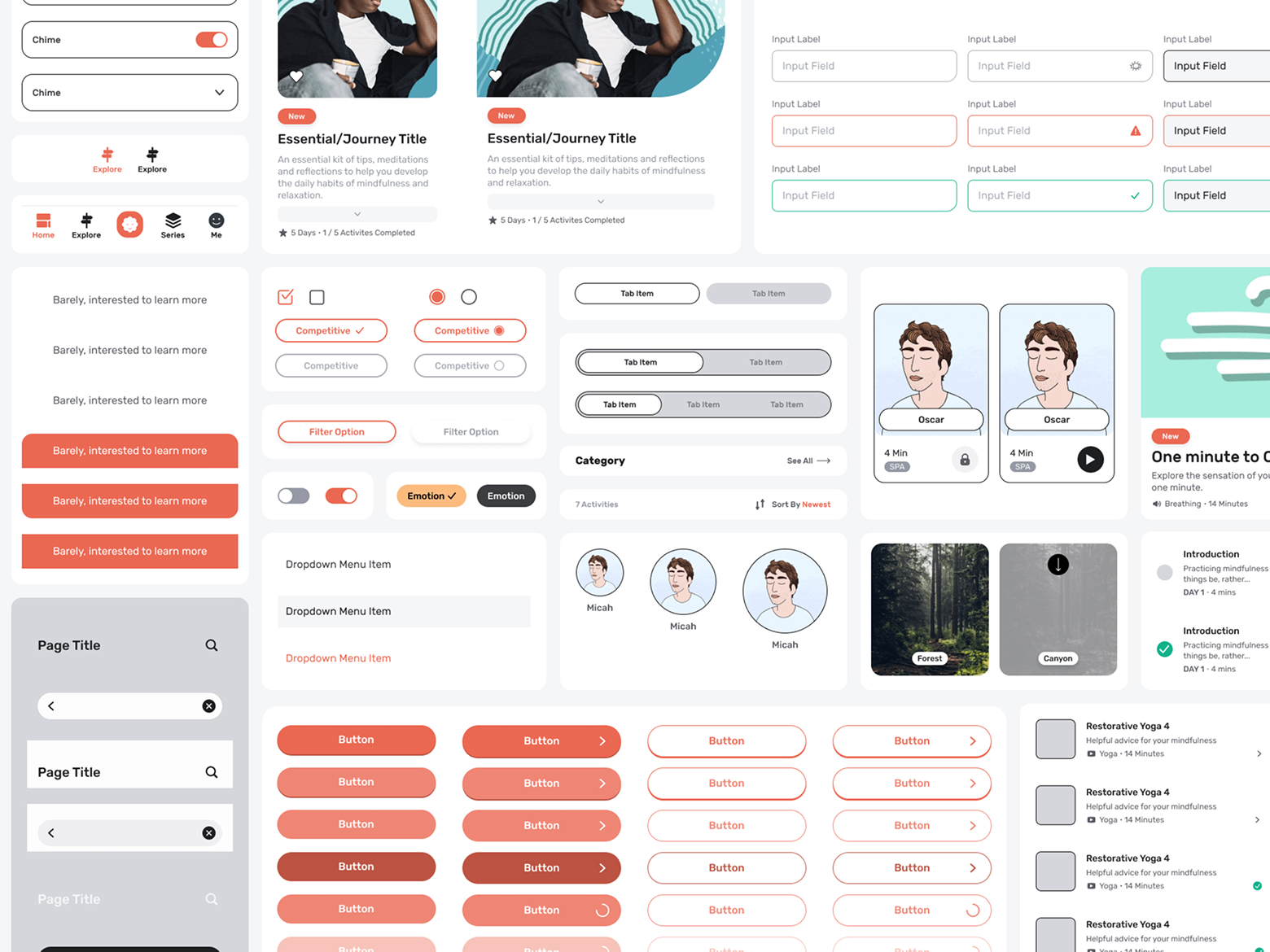
Built a new component library from scratch — establishing ADA-compliant color, typography, and interaction patterns. Analyzed user behavior data and conducted testing to identify which existing components to update vs retire. The result: a streamlined system that met accessibility standards and supported better user experiences.
MyLife ADA-compliant component library

The ADA-compliant component library — buttons, inputs, toggles, tabs, cards, and navigation — built to serve as the single source of truth for the full app redesign.

2
Wireframing & user flows
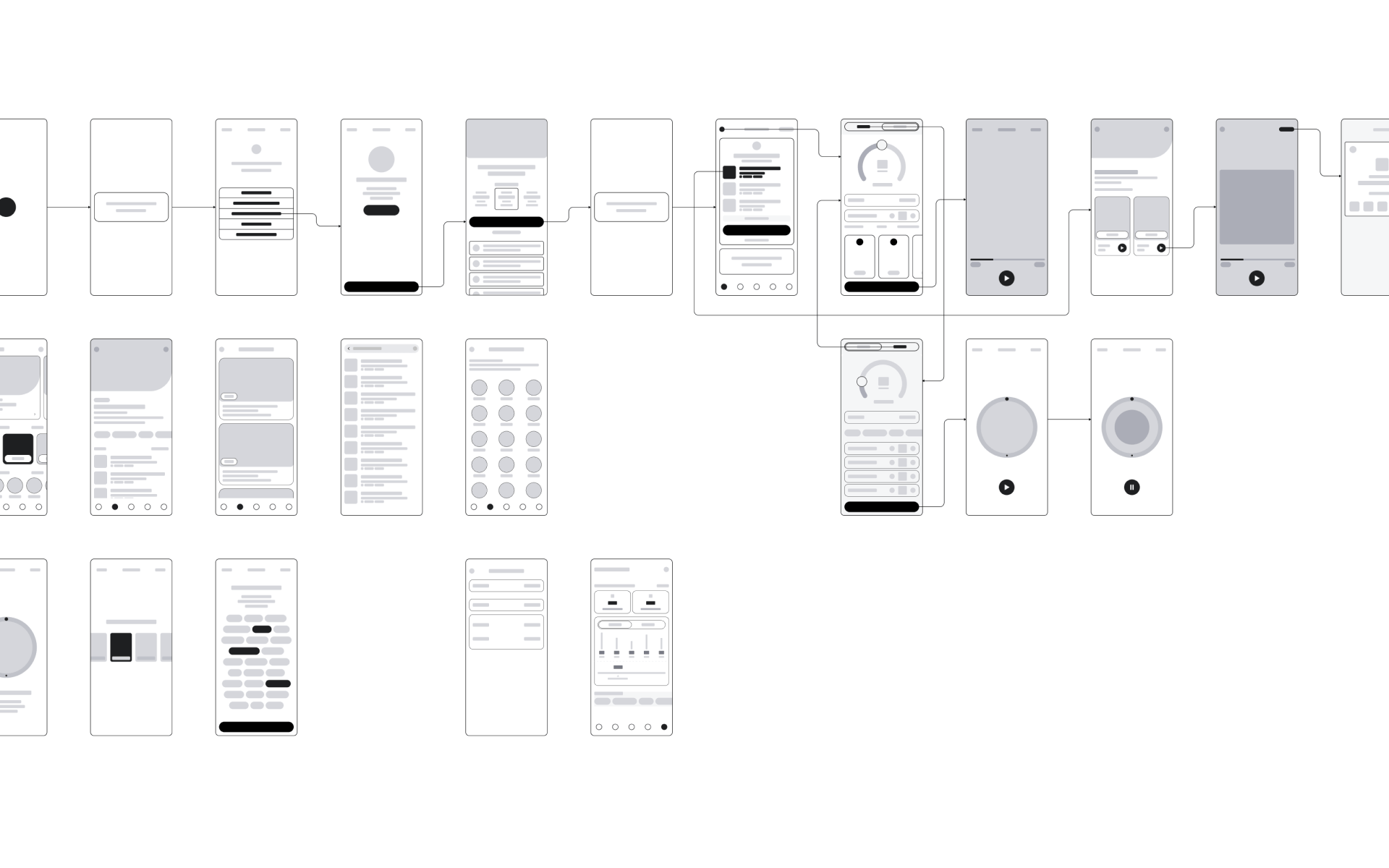
Before any high-fidelity design, we mapped the full app user flow in wireframes — every screen, every decision point, every path through the onboarding and session experience. This gave the team a shared blueprint before a single pixel of UI was committed.
MyLife app wireframes and user flows

Full app wireframe map — onboarding flow, session discovery, player, journeys, and settings.

3
Value-first onboarding
Shifted to a value-first model — users experience a guided session within the first two minutes before being asked to create an account. Personalization questions deferred and collected progressively through actual use.
4
Mood-based session discovery
Redesigned the home screen around mood-based entry points — "How are you feeling right now?" surfaces three to five relevant sessions rather than forcing navigation through a full catalog.
5
Progress system redesign
Replaced streak-based tracking (which punishes missed days) with a cumulative growth model — total minutes, total sessions, a personal wellness profile that grows regardless of gaps.
6
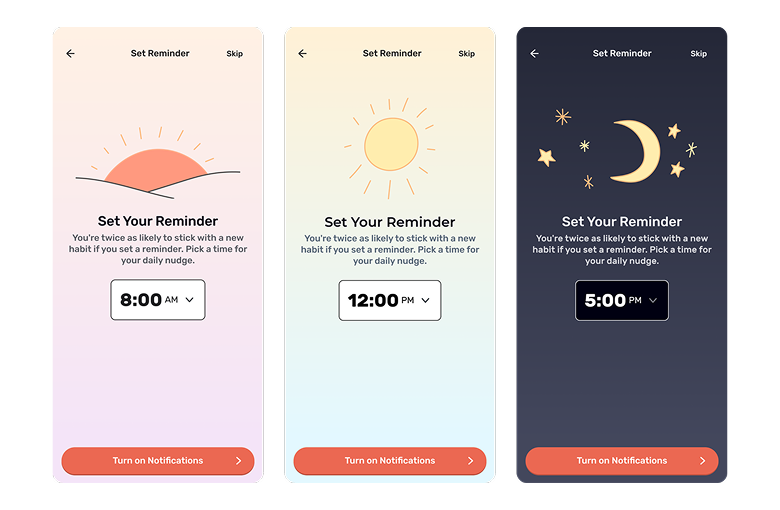
Contextual notifications
Redesigned push notification UX to be contextual and non-pressuring — offering a specific session based on time of day and past behavior, not a generic reminder.
05
Print advertising

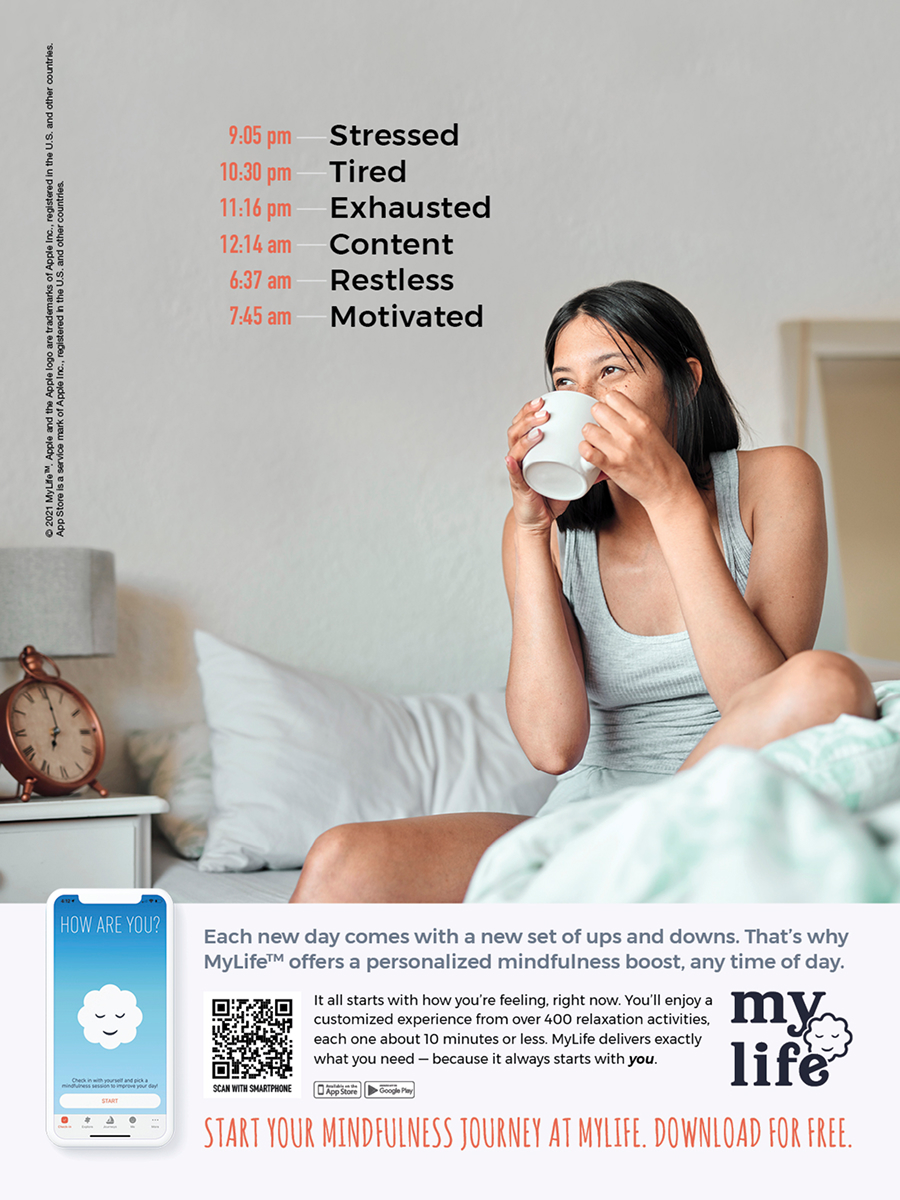
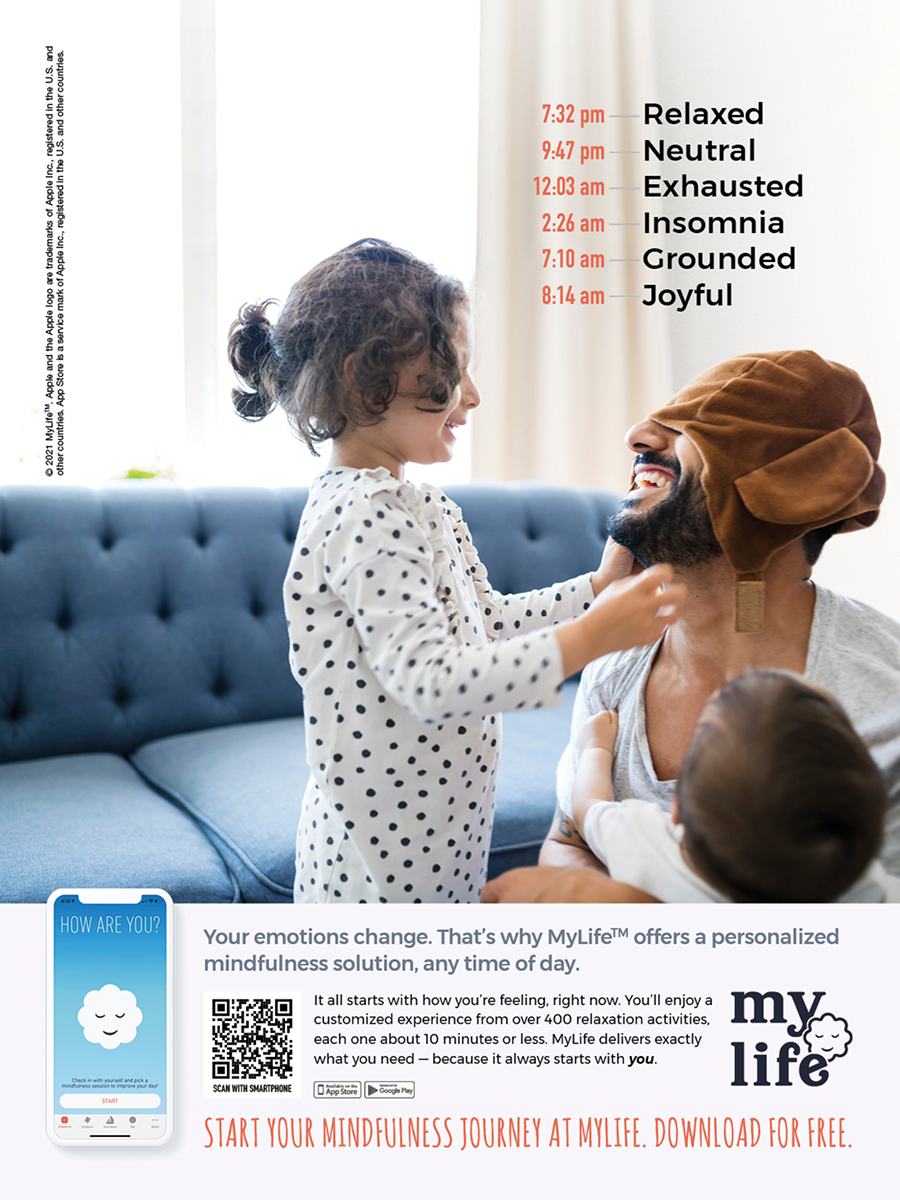
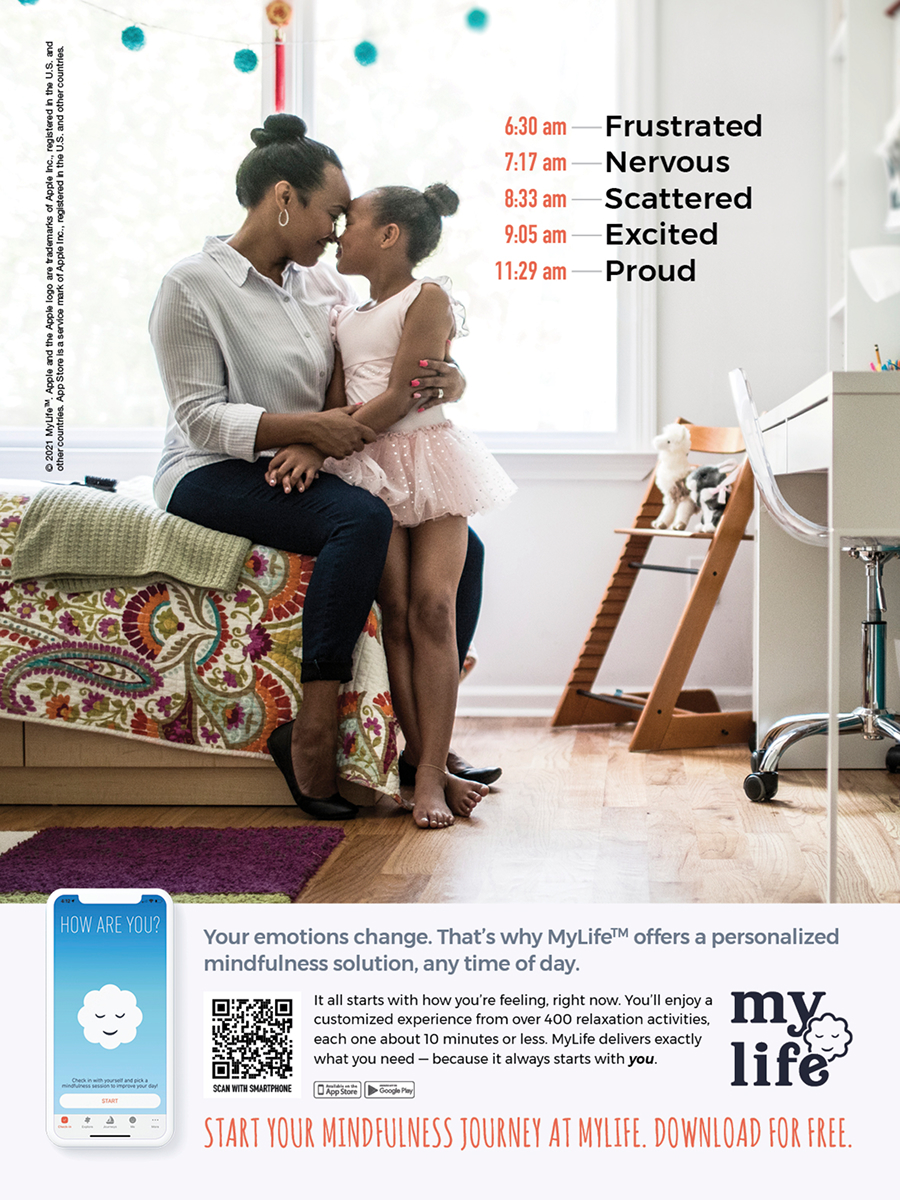
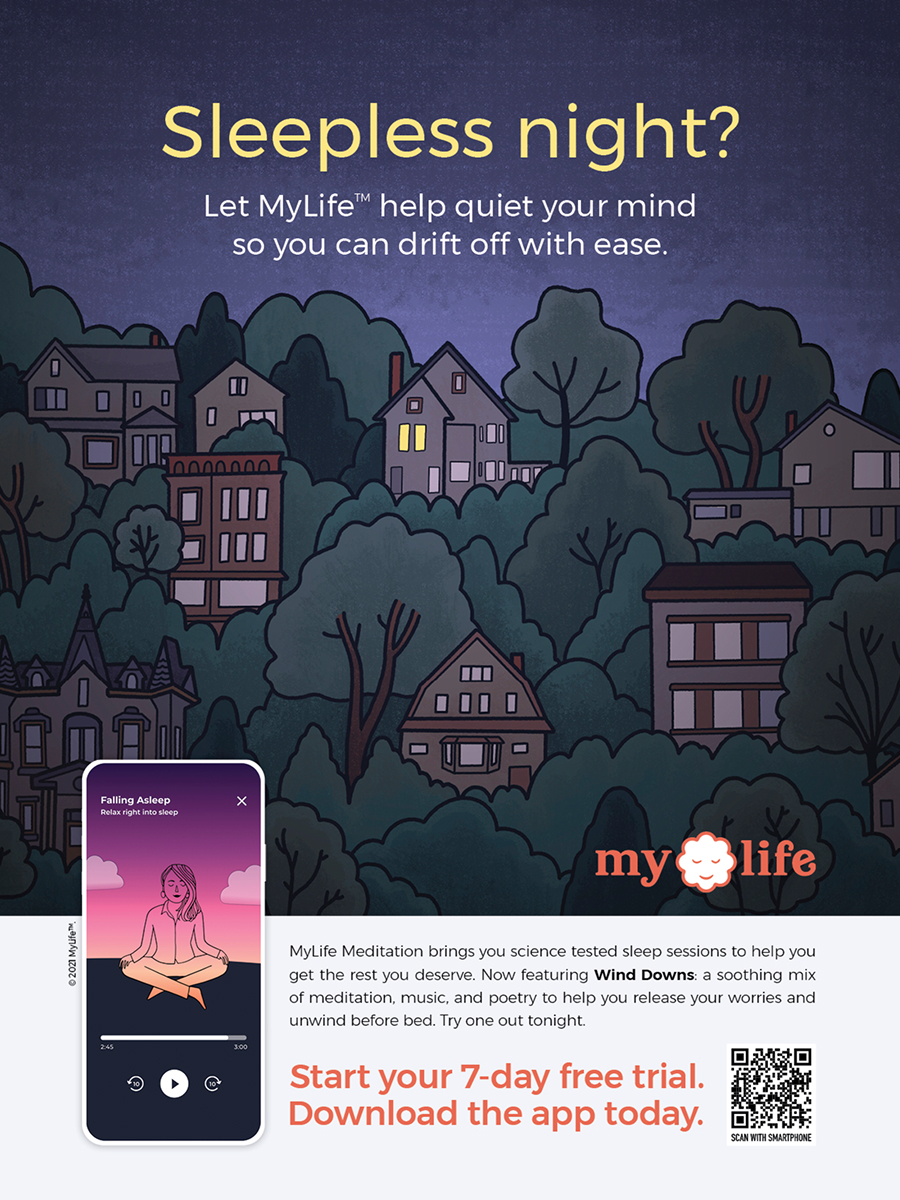
Beyond the app redesign, I also led the design of full-page and partial magazine ad campaigns for MyLife — printed in People, Better Homes & Gardens, Real Simple, and Martha Stewart Living. Multiple campaigns, multiple art directions, all consistent with the brand system.

Published in People · Better Homes & Gardens · Real Simple · Martha Stewart Living
MyLife People ad — emotional timeline
MyLife People ad — family
MyLife — Cue a Better Mood
MyLife spread — Your anxiety will thank you

Full-page and partial magazine ads across multiple campaigns — printed nationally in major consumer publications.

Extended to digital — same campaign direction
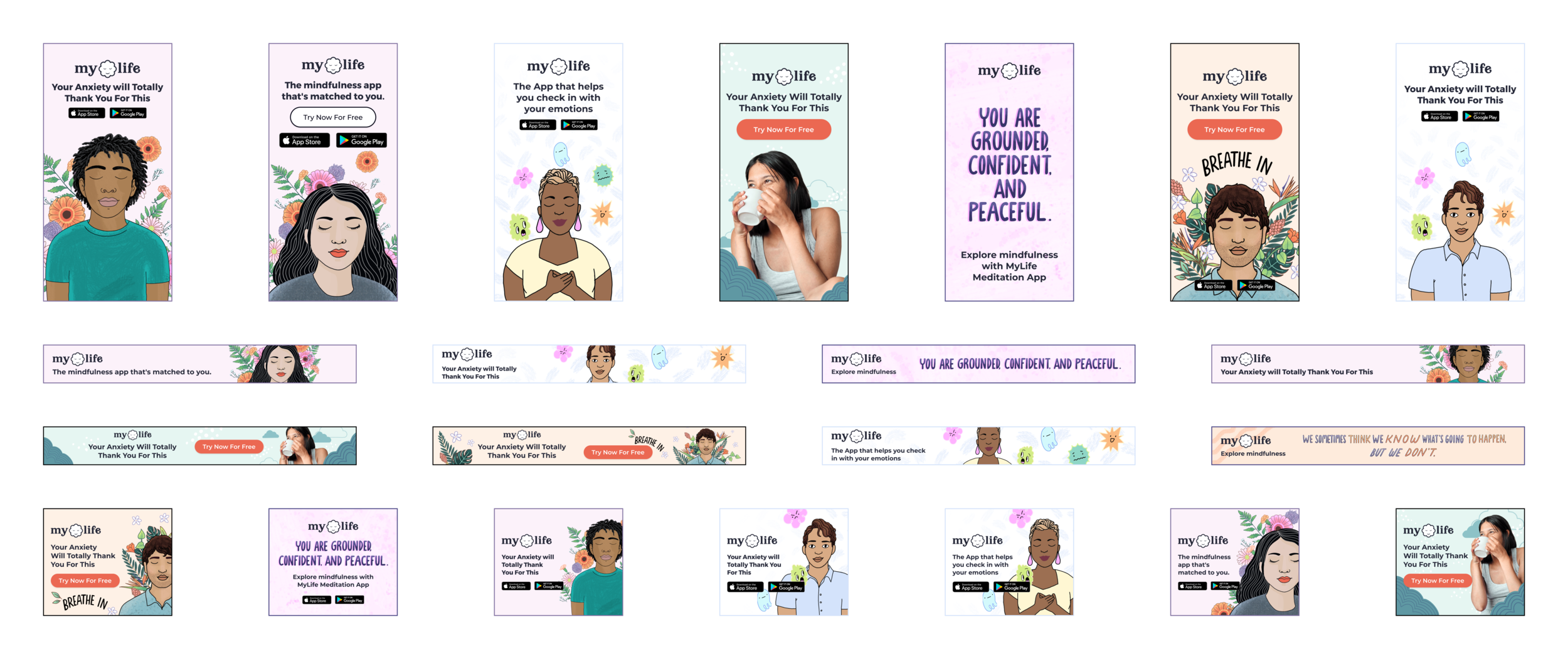
MyLife digital ad units

The print campaign's illustration direction extended across all standard digital ad formats — social, display, and mobile.

04
The full redesign

The redesigned app introduced a cohesive brand system applied across every screen — consistent typography, color, illustration style, and interaction patterns. The updated illustration style drove a significant increase in downloads and notification opt-ins, proving that the visual direction change was data-backed, not just aesthetic.

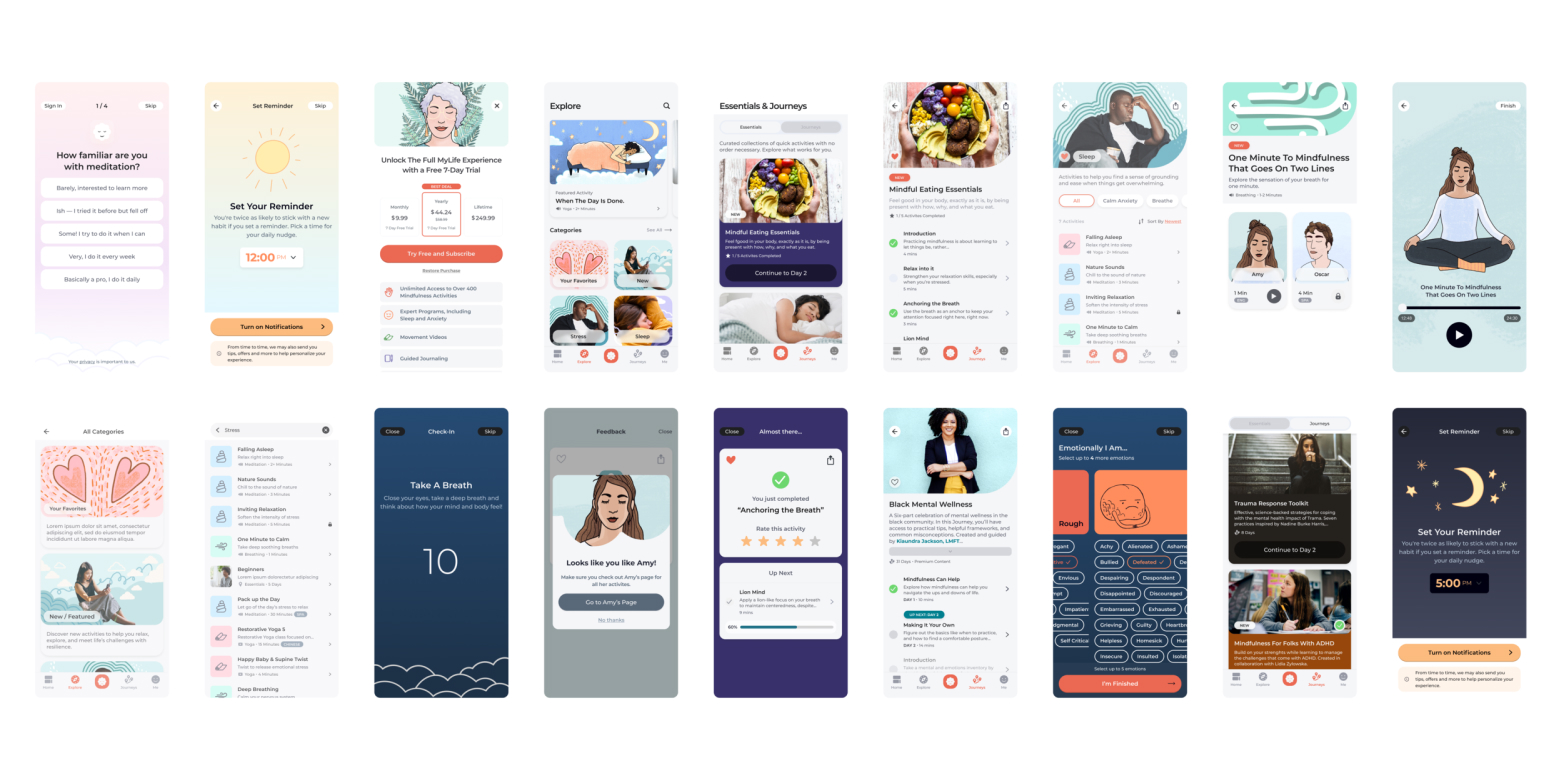
MyLife full UI screen redesign

The complete UI redesign — onboarding, check-in, session discovery, player, journeys, and more.

05
The results

The redesigned app and updated illustration style drove significant growth across every key metric — installs, monetization, engagement, and notification opt-ins. The print campaign added a measurable acquisition channel that hadn't existed before.
App performance
303,985
Total installs
400%
Growth with ARPU increasing from $0.21 to $1.13
43%
Lift over Q2
794%
Increased enrollment in push notifications
With minimal impact to activities started — users opted in at a dramatically higher rate after the redesigned onboarding flow.
MyLife notification screens — morning, afternoon, night
Print campaign results
11,247
Downloads via QR codes in print ads
0.014%
Download-to-circulation rate — up from 0.005% previously
10M+
Average monthly impressions across publications
Next project
Comment Sentiment Analysis